


The Good Life
If my grandparents were still alive today, I know they would be more than just a little bit amused at how trendy sustainable living has become. I think they would also be encouraged, seeing it as a step in the right direction. When the local garbage company began offering recycle pick-up many years back now, I remember one of my grandmothers proudly stating, "We did this during the war. We ALL saved our tin cans and other things to be reused!" For my grandparents' generation, "the war" was how they referred to World War Two. "World War Two was a time in our history when recycling was done out of necessity. Living sustainably was neither trendy nor novel to my grandparents; it was simply how things were done.
To be fair, I don't think the modern interest in sustainable living stems from novelty alone, but rather, from the realization that irresponsibility and recklessness with our resources has the potential to create scarcity and a host of other problems in the future. So, here I am, living in a way that I think would have made my grandparents proud, and I can see now that there is something incredibly satisfying about living sustainably. It isn't simply the ease of conscience that comes from doing the right thing. No, it's much more than that. It's the sheer delight that comes from productivity. It's the sense of calm that comes from living closer to nature. It's having a front row seat to the miraculous. It's living in balance with nature, and seeing that when you give to the garden, the garden gives back with great abundance.

The most beautiful part of all of this is not just that the garden gives us produce in exchange for our diligence. Even the weeds, those plants that come up uninvited, serve as free food for our rabbits, chickens, ducks, and geese. A patch of unwanted grass absolutely thrills our geese! Meanwhile, the chickens nibble on the various greens and delight in the occasional earthworm or grub. The ducks focus on digging through the soil that clings to the roots, knowing that within the soil is a treasure trove of insect life that serves as a gourmet feast for them. In return, they give us eggs for our breakfast table and meat for our dinner table, all of which is second-to-none. And when we do process one of our birds, we allow nothing to go to waste. The feathers become compost, as well as the bones, once they have been used to make all kinds of amazing broth. I add so many medicinal herbs, fresh from our food forest, to my broth that it takes on a greenish hue. That broth is the perfect remedy to reach for when illness strikes our home.
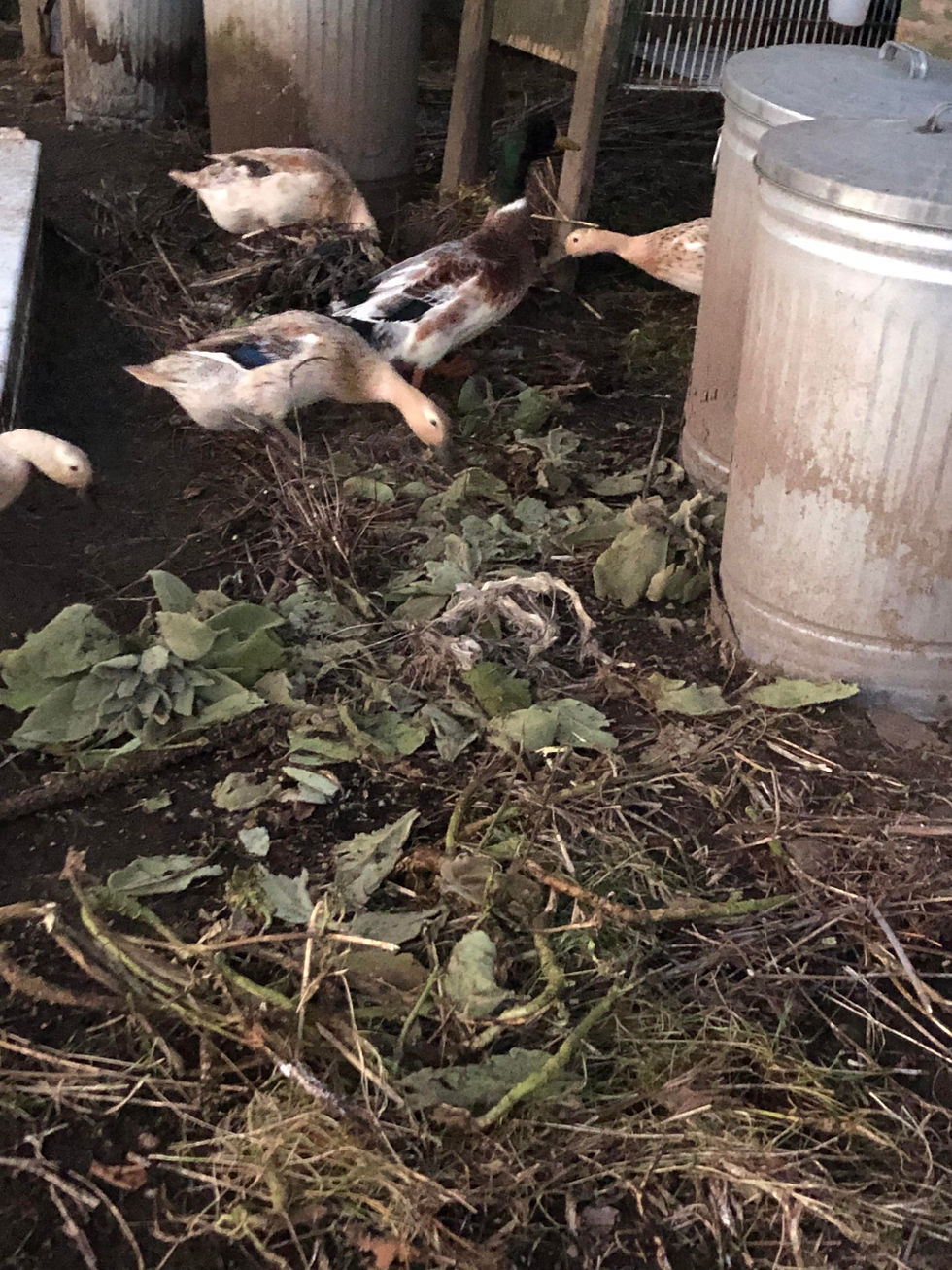


There are so many more examples that I could offer to explain this in greater detail. The plants that are inedible, (such as the tomatoes, peppers, and eggplants,) provide the necessary green material to help our compost pile spring to life. The leftover branches from pruning our fruit trees, berry bushes and plants can be propagated to increase the density of our food forest or to give a small start to a friend who is still building up their garden. They can also be used to feed the rabbits, chickens, ducks, and geese. Extra eggs can be combined with some of our garden produce and can be added to meat and rice to make a dog food that makes our dogs healthy and happy. There are a hundred other examples like this, but I will save those for another post. For now, though, I am off to live the good life. I can almost see my grandparents smile.


Comments